
By Hazel Scott/ASU
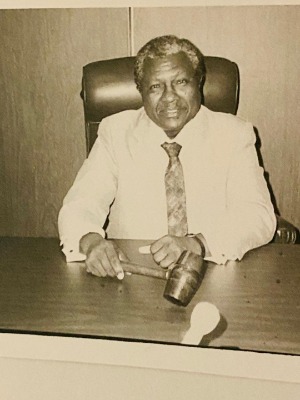
On October 30, a historic marker in Montgomery will honor the legacy of Judge Thomas W. Gray, Sr., a civil rights pioneer whose life was defined by service, courage and a deep belief in justice. For the Gray family, the dedication is more than a public tribute. It is a homecoming to the place where their family’s story took root and a reminder of one man’s enduring commitment to standing up for others.
The marker will be unveiled at noon Friday, October 30, 2026, at Mobile Drive and East Tuskegee Circle, near 3251 Mobile Drive in Montgomery’s Mobile Heights neighborhood. The site is near the Gray family home during the 1950s, when the neighborhood provided returning veterans and their young families a place to build new lives.
“My father never sought monuments; he sought justice,” said Karen Gray Houston, an author and journalist. “He served his country in the Navy. He built a business and helped lead the Montgomery Bus Boycott. He spent decades in Ohio practicing civil rights law. And what a profound sense of poetic justice that he eventually returned to Alabama as a federal administrative law judge.”
She said the marker represents more than one man’s accomplishments. It honors the perseverance, faith and courage of the many unsung people who helped shape the modern civil rights movement.
A Voice for Justice before the Boycott
Gray’s commitment to civil rights began years before the Montgomery Bus Boycott captured national attention.
In 1950, after the fatal shooting of Hilliard Brooks, a childhood friend and fellow World War II Navy veteran, Gray helped organize a protest demanding accountability. When city officials declined to prosecute the officer responsible, Gray rallied veterans and other demonstrators, urging African Americans to register to vote. Their message, “Ballots will beat bullets,” reflected his belief that ordinary citizens could challenge injustice through collective action.
Five years later, Gray helped lay the organizational foundation for the Montgomery Bus Boycott. As a member of the Montgomery Improvement Association (MIA), he worked alongside fellow activists and community members in the campaign against segregated public transportation. His younger brother, renowned civil rights attorney Fred D. Gray, served as legal counsel to the MIA, whose meetings were led by the Rev. Dr. Martin Luther King Jr.
Fred Gray emphasized that the boycott’s success depended on the courage and determination of local residents, including his brother.
“The citizens of Montgomery and the nation need to know that local people, right here in this community, helped make that success possible, and Judge Thomas Gray was among those who played a vital role,” he said.
A Lifetime of Service
Gray served four years in the United States Navy during World War II before becoming a business owner and civil rights advocate. He later spent decades practicing civil rights law in Cleveland, Ohio, fighting discrimination and defending peoples rights. His eventual return to Montgomery as a federal administrative law judge brought his career of public service full circle.
A proud alumnus of Alabama State University, Thomas Gray shared his commitment to service with his brother, reflecting the University’s lasting influence on their lives.
Karen Gray Houston has continued that family legacy through her book, “Daughter of the Boycott,” which honors her father, her uncle Fred D. Gray and the countless people whose sacrifices helped dismantle segregation. Their stories illuminate the courage of those who faced threats, vandalism and violence while demanding equal rights.
The October 30 dedication will bring together family members, community leaders and historians to celebrate Judge Gray’s contributions. A military honor guard will present a flag and play taps in recognition of his World War II service.
“This historical marker is not only meaningful to the Gray family, but it is also meaningful to the broader Montgomery community,” Fred Gray said. “I am grateful that the city of Montgomery, its leaders, and the Alabama Historical Association have chosen to recognize one of their own—Thomas W. Gray, who was born in Montgomery, who was educated in Montgomery, and played a significant role in the organization and development of the Montgomery Bus Boycott.”
A Legacy for Future Generations
When the marker is unveiled near the former Gray family home, it will connect a family’s personal history to a pivotal chapter in the nation’s struggle for civil rights. It will also honor the neighbors who marched, the veterans who protested and the citizens who risked so much to demand justice.
For Gray’s children, the marker is a tribute to a father who valued justice over recognition and a community whose collective courage helped change history.
“We hope this marker helps future generations understand the courage required to challenge injustice,” Houston said. “Even in the face of profound injustice, ordinary people can find the courage to stand together, raise their voices, and help build a more just world.”
For more information about Karen Gray Houston and her book, “Daughter of the Boycott,” visit www.karengrayhouston.com.