
 |
 |
 |
 |
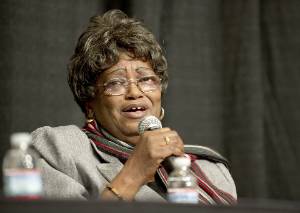
Fred Gray Claudette Colvin
By Hazel Scott/ASU
Decades have passed since 1956, a year heralded as a major turning point in American history. On February 1, the nation will commemorate the 70th year of courage and constitutional change when it celebrates Browder v. Gayle, a landmark court case that started in Alabama and defined segregation on buses as unconstitutional everywhere.
The events leading up to the case started in Montgomery, Alabama, during the mid-1950s—a time when buses were divided by race—when four brave African American women took a stand that would change history. Among them was Claudette Colvin, just 16 years old, who refused to give up her seat to a white passenger on a segregated bus. This act of defiance helped spark a landmark legal battle: Browder v. Gayle.
Filed on February 1, 1956, by young civil rights attorney and Alabama State University alumnus Fred Gray, the case challenged Alabama’s segregation laws on public buses. Gray took the case to federal court where Colvin bravely testified before a special three-judge District Court panel, sharing her experience as a young woman arrested for standing her ground. On June 5, 1956, the court ruled that bus segregation laws were unconstitutional, a decision upheld by the U.S. Supreme Court later that year.
This victory was more than a legal triumph—it was the key to ending the Montgomery Bus Boycott, a yearlong protest demanding equal rights on public transportation. While Rosa Parks is often remembered as the face of the boycott, Colvin and the other plaintiffs formed the sturdy backbone of this historic movement. Their courage protected the rights of African American riders not only in Alabama, but also across the nation.
Gray, who was a pivotal figure in the Civil Rights Movement, saw this victory as a legal cornerstone of the Montgomery Bus Boycott’s success.
Before Colvin’s death on January 13 of this year, she spent her life continuing to speak out for the cause of civil and human rights. Though she was initially overlooked, her legacy lives on as a pioneer who dared to sit, speak, and fight for justice.
The 70th anniversary of Browder v. Gayle reminds us that lasting change often begins with quiet courage and steadfast determination to uphold the Constitution for all.